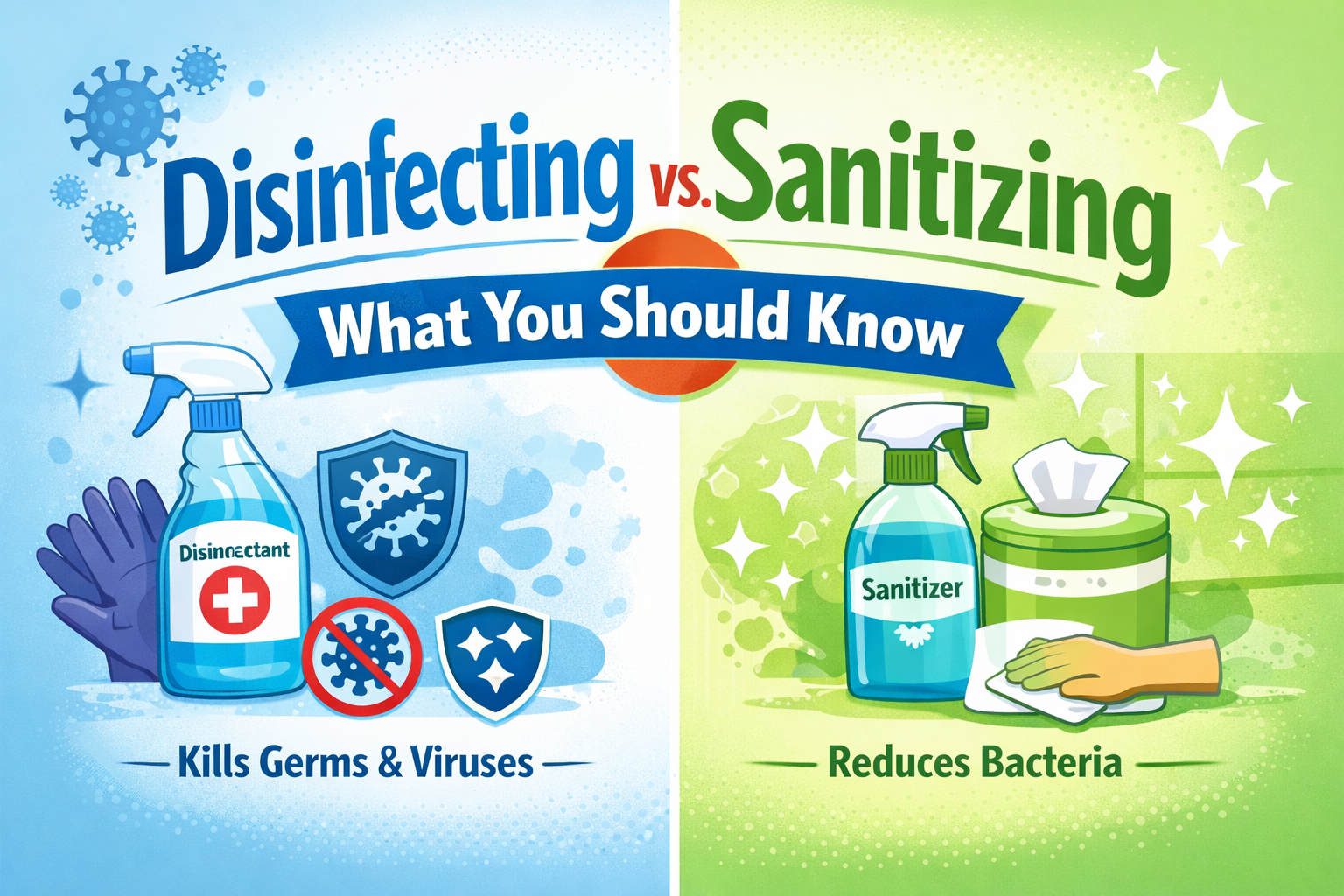
In commercial and institutional facilities, cleanliness is about more than appearance, it is about health, safety, and risk management. Two terms that are often used interchangeably, but are not the same, are sanitizing and disinfecting.
Understanding the difference is critical for facility managers, especially in offices, medical facilities, schools, manufacturing plants, and corporate offices. Choosing the wrong process can leave your facility under-protected or overspending on unnecessary treatments.
Here’s what facility managers need to know.
Sanitizing: Reducing Germs to Safe Levels
Sanitizing reduces the number of bacteria on a surface to levels considered safe by public health standards. It does not eliminate all germs, viruses, or pathogens.
Key Characteristics of Sanitizing
- Reduces bacteria by at least 99.9%
- Designed for lower-risk environments
- Typically faster application and shorter dwell time
- Commonly used in food service, offices, and general-use areas
Best Uses for Sanitizing
- Office breakrooms
- Conference tables
- Desks and workstations
- Cafeterias and food-prep surfaces
- Restroom touchpoints in low-traffic facilities
Sanitizing is ideal for routine maintenance cleaning where surfaces are touched frequently but the risk of exposure is relatively low.
Disinfecting: Killing Harmful Pathogens
Disinfecting goes a step further. It is designed to kill or inactivate viruses, bacteria, and fungi, including many that sanitizers do not address.
Key Characteristics of Disinfecting
- Kills viruses and bacteria, including influenza, norovirus, and COVID-19
- Requires EPA-registered disinfectants
- Must remain on surfaces for a specific dwell time
- Used in high-risk or regulated environments
Best Uses for Disinfecting
- Medical and dental offices
- Restrooms in high-traffic buildings
- Daycare and school environments
- Gyms and locker rooms
- Manufacturing and industrial facilities
- After confirmed illness or outbreaks
Disinfecting is essential when health risk, liability, or compliance is a concern.
Sanitizing vs. Disinfecting: Side-by-Side Comparison
| Category | Sanitizing | Disinfecting |
| Purpose | Reduce germs to safe levels | Kill harmful pathogens |
| Kills viruses | No | Yes |
| EPA registration required | Sometimes | Always |
| Dwell time | Short | Longer |
| Use frequency | Daily / routine | Scheduled or as needed |
| Risk level | Low to moderate | Moderate to high |
Why the Difference Matters for Facility Managers
Facility managers are responsible not only for cleanliness but also for:
- Employee health
- Occupant safety
- Regulatory compliance
- Liability exposure
- Brand reputation
Using sanitizers where disinfection is required can leave your facility vulnerable. Conversely, disinfecting every surface every day can be unnecessary and costly.
A balanced, strategic approach is the professional standard.
When to Use Both
In many facilities, the best approach is a combination of both sanitizing and disinfecting, based on area usage and risk level.
Example Facility Strategy
- Daily: Sanitize desks, common surfaces, and breakroom areas
- Weekly or Monthly: Disinfect restrooms, shared equipment, and high-touch zones
- As Needed: Full disinfection following illness exposure or seasonal outbreaks
Professional cleaning programs are designed around traffic patterns, surface types, and occupancy, not guesswork.
The Importance of Proper Application
Even the best disinfectant is ineffective if:
- The surface is not cleaned first
- The chemical is diluted incorrectly
- The dwell time is not met
- The wrong product is used on the wrong surface
Professional cleaners are trained to:
- Follow manufacturer and EPA guidelines
- Use correct dwell times
- Select surface-safe products
- Prevent cross-contamination
This is especially critical in medical, educational, and industrial environments.
How Optimum Cleaning Solutions Supports Facility Managers
At Optimum Cleaning Solutions, we develop customized cleaning programs that align with your facility’s requirements, industry standards, and operational needs.
Our Services Include:
- Routine sanitizing programs
- Scheduled disinfecting services
- High-touch point disinfection
- Restroom and breakroom hygiene programs
- Medical and professional facility cleaning
- EPA-compliant chemical usage
- Diversey auto-diluting chemical dispensers
- Trained, insured cleaning technicians
We help facility managers strike the right balance of clean, compliant, and cost-effective.
Final Takeaway
- Sanitizing reduces germs and supports everyday cleanliness
- Disinfecting eliminates harmful pathogens and reduces health risk
- Facility managers need both, applied strategically
Understanding the difference protects your people, your property, and your organization.
Need help building the right cleaning program for your facility?
Visit www.ocsclean.com or contact Optimum Cleaning Solutions to schedule a consultation.