
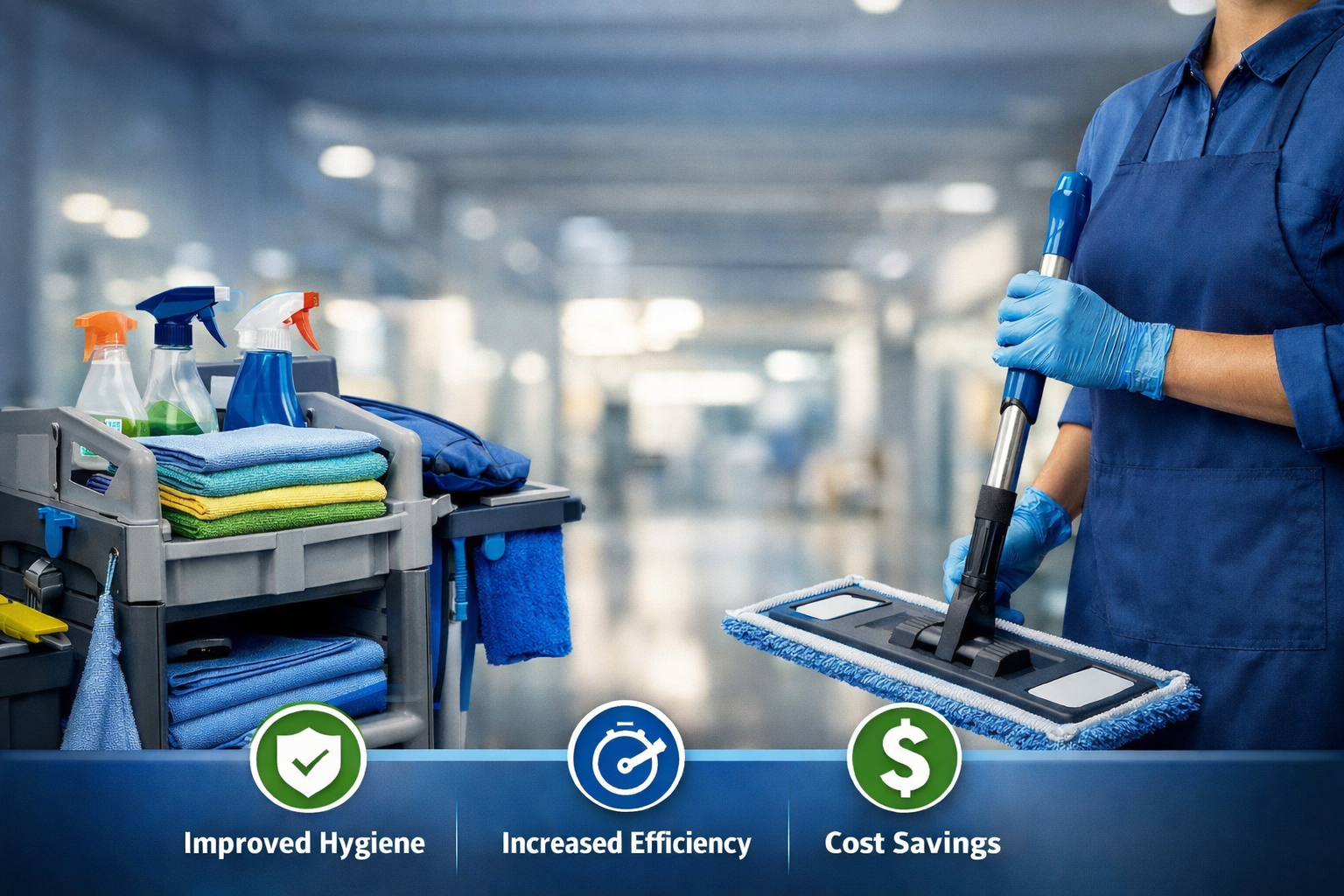
If you’ve noticed more professional janitorial teams switching from traditional cotton mops and “one rag for everything” cleaning, there’s a reason: microfiber cleaning systems consistently remove more soil, reduce cross-contamination, and often cut down on chemical usage when used correctly.
This post breaks down what a microfiber system actually is, why it works, and how to implement it the right way in real-world facilities (offices, schools, medical, industrial, and everything in between).
What is a microfiber cleaning system?
A microfiber cleaning system is a coordinated set of tools and processes built around microfiber textiles:
-
Microfiber cloths (general purpose, glass, dusting)
-
Microfiber flat mops and frames
-
Microfiber dust mops
-
Color-coding (to separate restrooms from general areas, etc.)
-
Controlled moisture methods (damp mopping, spray-and-wipe, pre-soaked mop pads)
-
A laundering and rotation process (so textiles stay effective and sanitary)
It’s not just “using microfiber.” It’s using microfiber with a repeatable workflow that prevents spreading soils and germs from one area to another.
Why microfiber works better than cotton
Microfiber is made from extremely fine synthetic fibers (often polyester and polyamide) split into wedge-shaped strands. That “split fiber” structure is the magic: it creates more surface area and tiny channels that grab and hold:
-
Dust and fine particulates
-
Oils and films (fingerprints, body oils, residue)
-
Soil tracked in from shoes
-
Moisture (without dripping everywhere)
Cotton tends to push soil around once it’s saturated. Microfiber is designed to capture soil, especially when used damp and changed frequently.
What’s included in a complete microfiber system?
1) Microfiber cloth program
A commercial setup typically uses multiple cloth types:
-
General-purpose cloths: desks, counters, fixtures
-
Glass/smooth-surface cloths: mirrors, stainless, glass (lint-free)
-
Dusting cloths: dry capture for ledges, vents, electronics surfaces
Pro tip: Teach staff to fold cloths into quarters. That gives 8 clean sides per cloth before swapping simple, measurable, and reduces re-wiping with a dirty side.
2) Flat microfiber mops (instead of string mops)
Flat mop pads are a major upgrade because you can:
-
Use pads damp, not soaking wet
-
Replace pads frequently (instead of re-dipping a dirty mop)
-
Reduce slip hazards and over-wetting (especially on LVP/LVT, sealed concrete, and wood-look floors)
3) Color-coding to prevent cross-contamination
Color-coding is one of the easiest ways to tighten consistency:
-
One color for restrooms
-
One for break rooms/food areas
-
One for general office areas
-
One for glass/high-polish surfaces
This is especially helpful when you have multiple techs rotating between zones.
4) Controlled moisture methods
Microfiber performs best with controlled dampness:
-
Spray-and-wipe for touchpoints (door handles, counters, tables)
-
Damp mop for most hard floors
-
Pre-soak pads (sometimes called “bucket-less mopping”) for consistent coverage without re-dipping
Over-wetting is a common reason floors look streaky or re-soil faster.
Key benefits of microfiber cleaning systems in commercial buildings
Better soil removal (and better-looking facilities)
Microfiber is excellent at removing the fine film that makes floors and surfaces look dull even when they’ve been cleaned.
Reduced cross-contamination
Changing cloth sides and swapping mop pads by area helps stop the “spread” that happens when one mop bucket is used everywhere.
Often less chemical dependency
Because microfiber captures soil so well, many tasks can be performed with fewer harsh chemicals (depending on facility requirements). That can mean:
-
fewer residues
-
fewer odors
-
better indoor air experience for employees and visitors
Faster workflows and less fatigue
Flat mops glide easier and weigh less than waterlogged string mops. That improves productivity and reduces strain over long shifts.
Long-term cost control
Microfiber has an upfront cost, but a well-managed program can reduce waste (paper towels, disposable wipes) and keep tools consistent across crews.
Best practices: how to use microfiber correctly
Microfiber is powerful but only if the program is disciplined. Here are the non-negotiables:
Use “clean-to-dirty” sequencing
Start with the cleanest areas and move toward dirtier areas. Example:
-
offices and conference rooms
-
corridors
-
break rooms
-
restrooms
Change textiles frequently
A microfiber cloth or pad has a capacity. Once it’s loaded, performance drops and you start smearing.
Rule of thumb:
-
Swap cloths as soon as they feel saturated or visibly soiled
-
Swap mop pads by zone or by a defined square footage target (your team can standardize this)
Avoid fabric softener and dryer sheets
Fabric softener coats fibers and kills absorbency and “grab.” If microfiber starts streaking or feels slick, laundering is usually the culprit.
Be careful with bleach and high heat
Some microfiber products tolerate certain disinfectant laundering processes—others degrade faster. Follow manufacturer guidelines so you don’t shorten lifespan or reduce performance.
Store clean microfiber correctly
Clean textiles should be kept sealed/contained. Tossing clean pads into an open cart near dirty tools defeats the purpose.
Where microfiber systems shine the most
Microfiber can be used almost anywhere, but it’s especially valuable in:
-
Medical/healthcare offices: touchpoints, exam rooms, high-frequency wipe-downs
-
Schools/daycares: fast response to messes, better soil control in high-traffic areas
-
Office buildings: improved appearance on desks, glass, and hard floors
-
Gyms: sweat/oil removal and surface wiping (with appropriate chemistry for the facility)
Common mistakes to avoid
-
Using one cloth for an entire room: You’re just redistributing soil.
-
Drowning the mop pad: Over-wetting causes streaks, residue, and slip risk.
-
Skipping color-coding: Cross-contamination becomes unavoidable when teams are moving fast.
-
Poor laundering: This is the #1 reason microfiber “stops working.”
FAQ
Does microfiber disinfect?
Microfiber primarily removes soil and microbes through physical capture. Disinfection depends on the chemical and dwell time required for the specific application. Many facilities use microfiber for cleaning first, then apply disinfectant where required.
How long do microfiber cloths and pads last?
It varies by quality and laundering. A managed program (proper washing, no softener, correct heat) dramatically extends life.
Is microfiber safe for LVP/LVT and polished floors?
Yes, microfiber is often preferred because you can control moisture and reduce scratching risk compared with gritty cotton mops. As always, use the right pad type for the floor finish.
Want a microfiber-based cleaning program built for your facility?
If you’re looking to improve consistency, reduce re-soiling, and get a noticeably cleaner finish, microfiber systems are one of the most practical upgrades you can make.
If you want help implementing this in your building (training, color-coding, frequencies, and quality control), Optimum Cleaning Solutions can build a program tailored to your facility type and traffic levels.